Hong Kong Luxury Spending Fuels Uneven H1 Economic Recovery
Hong Kong's economy recorded its strongest half-yearly growth in nearly five years. High-end consumption and a polarised property market drive this recovery, with residential assets outperforming commercial spaces.
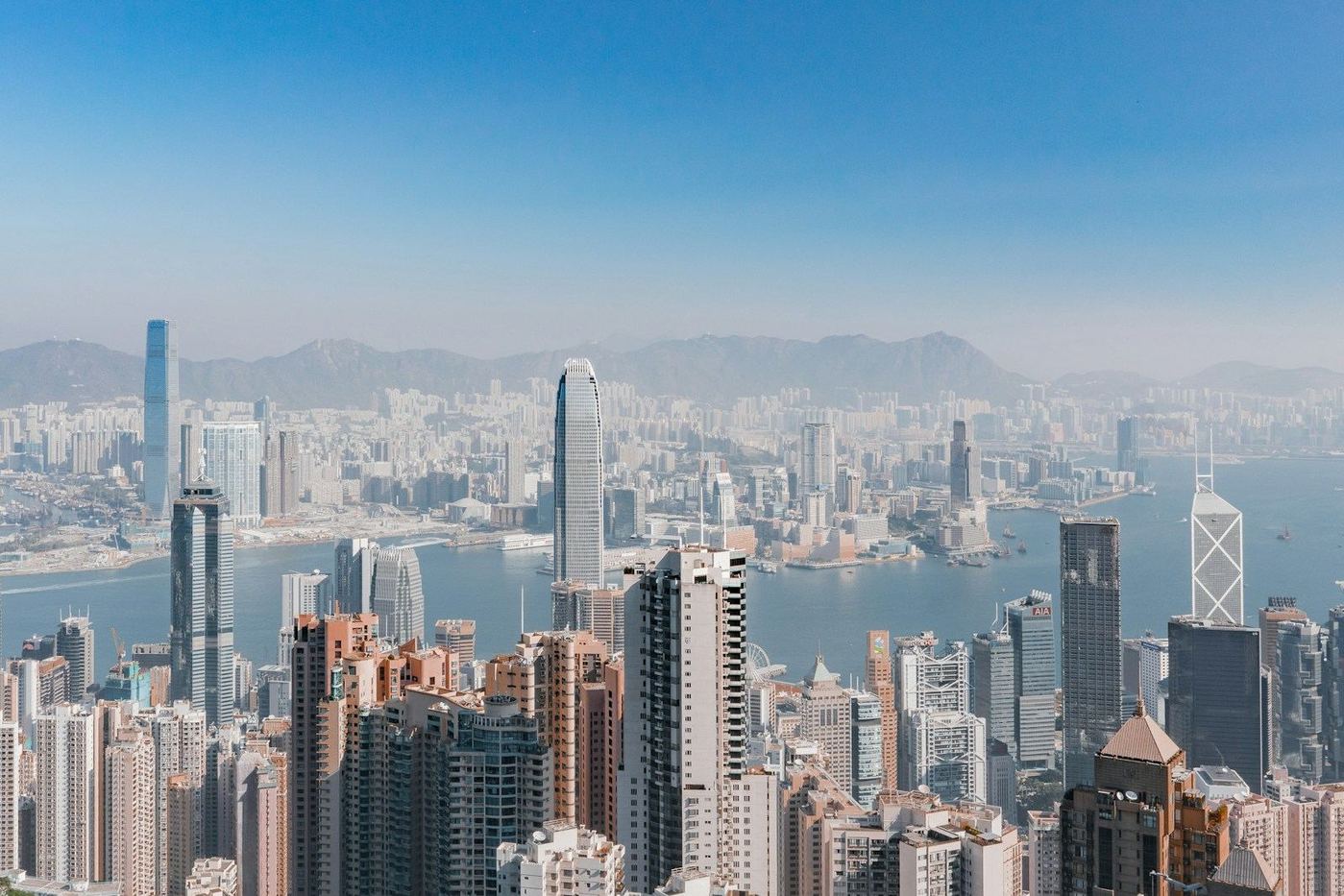
Luxury Consumption Drives Economic Rebound
Hong Kong's economy expanded by 5.1 per cent in the first half of 2026 compared to the same period in 2025. This marks the strongest half-yearly performance in almost five years. High-end consumption, including luxury penthouses, jewellery, watches, and clocks, fuels this rebound.
The government's "hard luxury goods" category saw its value increase by 25 per cent year-on-year in H1 2026, reaching HK$31 billion (US$3.95 billion). This category comprised 15 per cent of total retail sales, which rose 9.6 per cent overall in the first half, according to government data.
Residential Property Sees Strong Pickup
The improving economy brings some relief to Hong Kong's real estate sector, though the recovery remains uneven. The residential market shows a strong pickup. Vacancy rates have fallen below 5 per cent, and rents have surged back to record highs. This strength is supported by an influx of mainland students and skilled professionals.
Approvals under government talent-admission programmes and visa schemes reached 397,835 between 2023 and 2025, a 104 per cent increase from 2017 to 2019, Natixis data reveals. Despite this, residential sales prices remain nearly 20 per cent below their 2021 peak, JLL reported.
Commercial Market Faces Oversupply
Commercial property, however, demonstrates a weaker performance. JLL senior director of research Cathie Chung describes this as a "flight to quality" within the market. Growth concentrates in a few "trophy" Grade-A commercial buildings in Hong Kong Central, such as IFC and The Henderson, which approach full occupancy.
Demand from global financial firms like Jane Street, Quilter, and Point72 drives this. By contrast, most of the district's 60-plus Grade-A buildings face high vacancy rates, with some exceeding 20 per cent. The average vacancy for premium Grade-A offices in Central is 8.8 per cent, JLL stated.
Average Grade-A office rents in Central remain 40 per cent below their 2019 peak levels, JLL noted. This makes high-quality assets relatively affordable. However, the overall office sector continues to face structural oversupply, with Grade-A vacancy rates exceeding 17 per cent, a historical high, CBRE Hong Kong executive director Reeves Yan estimated.
This two-speed market means investors must carefully differentiate assets. While prime residential and top-tier commercial properties offer opportunities, the broader commercial segment faces sustained pressure from new construction and slower occupier demand, S&P Global Ratings analyst Edward Chan cautioned.
This article is journalism, not investment advice; consult a licensed professional before making financial decisions. Market data is indicative, may be delayed, and should be verified with your broker or exchange before use.
Comments.
Comments are moderated. We remove what is unlawful, abusive or off-topic, and and you remain responsible for what you post.
Reader comments open soon. Until then, corrections and responses go to our newsroom, and we publish what we get wrong on Corrections.