Malaysian Youths Challenge Government on Forest Cover Pledge
Six young Malaysians have filed a judicial review against the government, demanding a halt to deforestation and upholding a 50 per cent national forest cover commitment.
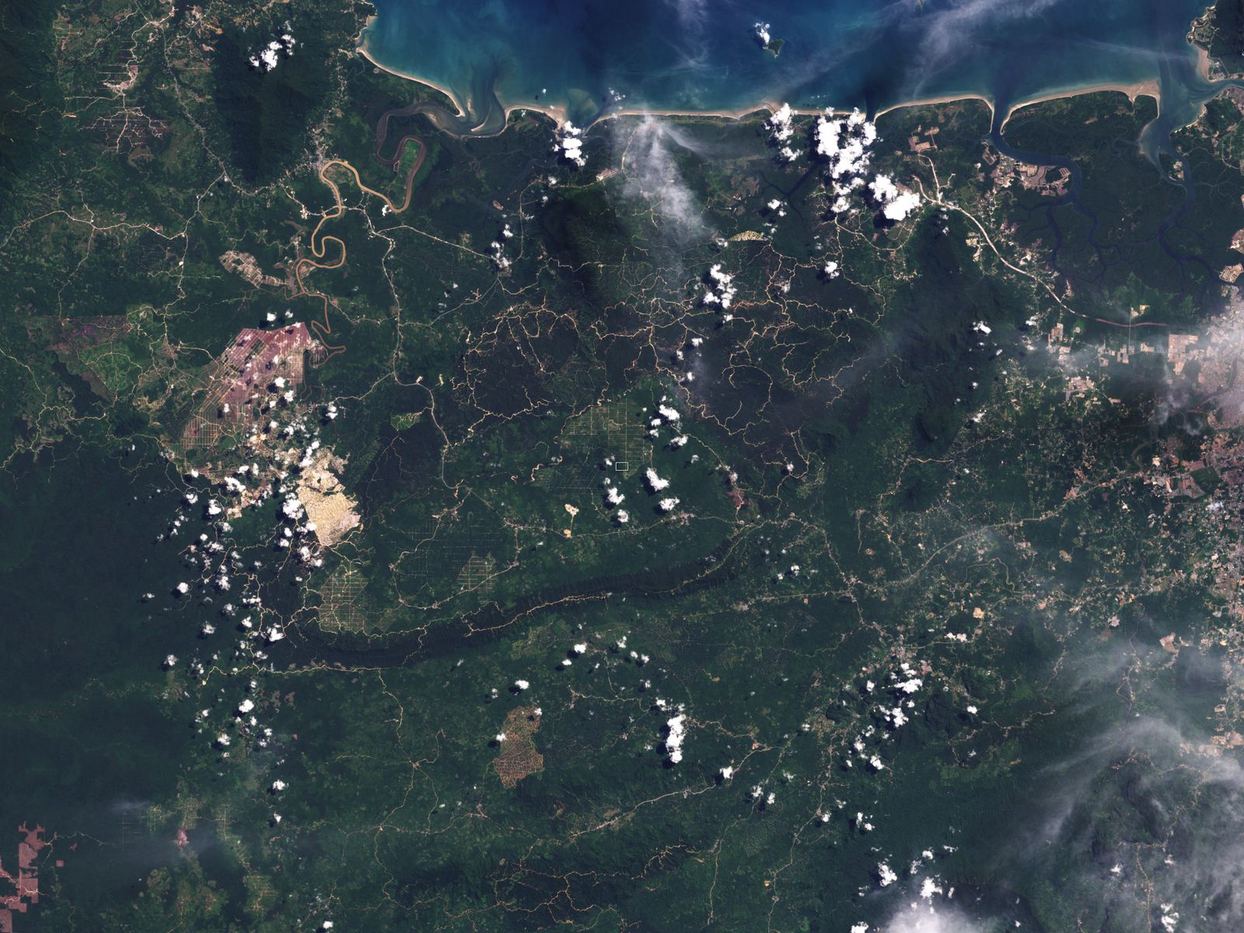
Legal Action Against Deforestation
Six young Malaysians initiated a judicial review in April, targeting the Minister of Natural Resources and Environmental Sustainability and the Malaysian government at the Kuala Lumpur High Court. The applicants seek a directive to halt deforestation and enforce a long-standing commitment to maintain at least 50 per cent of the country's land under forest cover.
This legal action aims to secure a formal declaration that the government's current land use practices violate constitutional principles and public trust.
Disputed Forest Cover Data
The applicants contend the government has breached a 1992 pledge by then-prime minister Mahathir Mohamad to preserve 50 per cent forest cover. They cite a 2026 report from environmental think-tank RimbaWatch, which uses spatial data to project forest cover falling to between 47.4 per cent and 49.6 per cent.
This projection follows the earmarking of over 4 million hectares for conversion into commercial ventures. The government's 2024 official estimate, by contrast, placed forest cover at 54.6 per cent, partly due to its definition including industrial plantations.
Legal Hurdles for Applicants
A significant challenge for the applicants is establishing locus standi, or the legal right to be heard in court. This requires demonstrating a direct impact from the issue. A federal court ruling in April 2026 set a precedent by denying locus standi to two environmental NGOs.
Those NGOs had challenged the degazettement of Selangor's Bukit Cherakah forest, but the court found they were established after the decision and thus not directly affected. This ruling could influence the outcome of the current deforestation case.
The lawsuit directly challenges the conversion of land for commercial purposes, including industrial monoculture plantations like oil palm and timber. A successful outcome for the applicants could significantly restrict future land development for these sectors, impacting investment decisions and land values across Malaysia.
Businesses operating or planning expansion in land-intensive industries may face heightened regulatory uncertainty, potentially leading to increased costs for land acquisition and development permits.
This article is journalism, not investment advice; consult a licensed professional before making financial decisions. Market data is indicative, may be delayed, and should be verified with your broker or exchange before use.
Comments.
Comments are moderated. We remove what is unlawful, abusive or off-topic, and and you remain responsible for what you post.
Reader comments open soon. Until then, corrections and responses go to our newsroom, and we publish what we get wrong on Corrections.