Hanwha Aerospace, KAI Partner on W1.9 Trillion KF-21 Missile
Hanwha Aerospace and Korea Aerospace Industries will jointly develop a long-range air-to-air missile for South Korea’s KF-21 fighter jet, building on earlier collaborations this year.
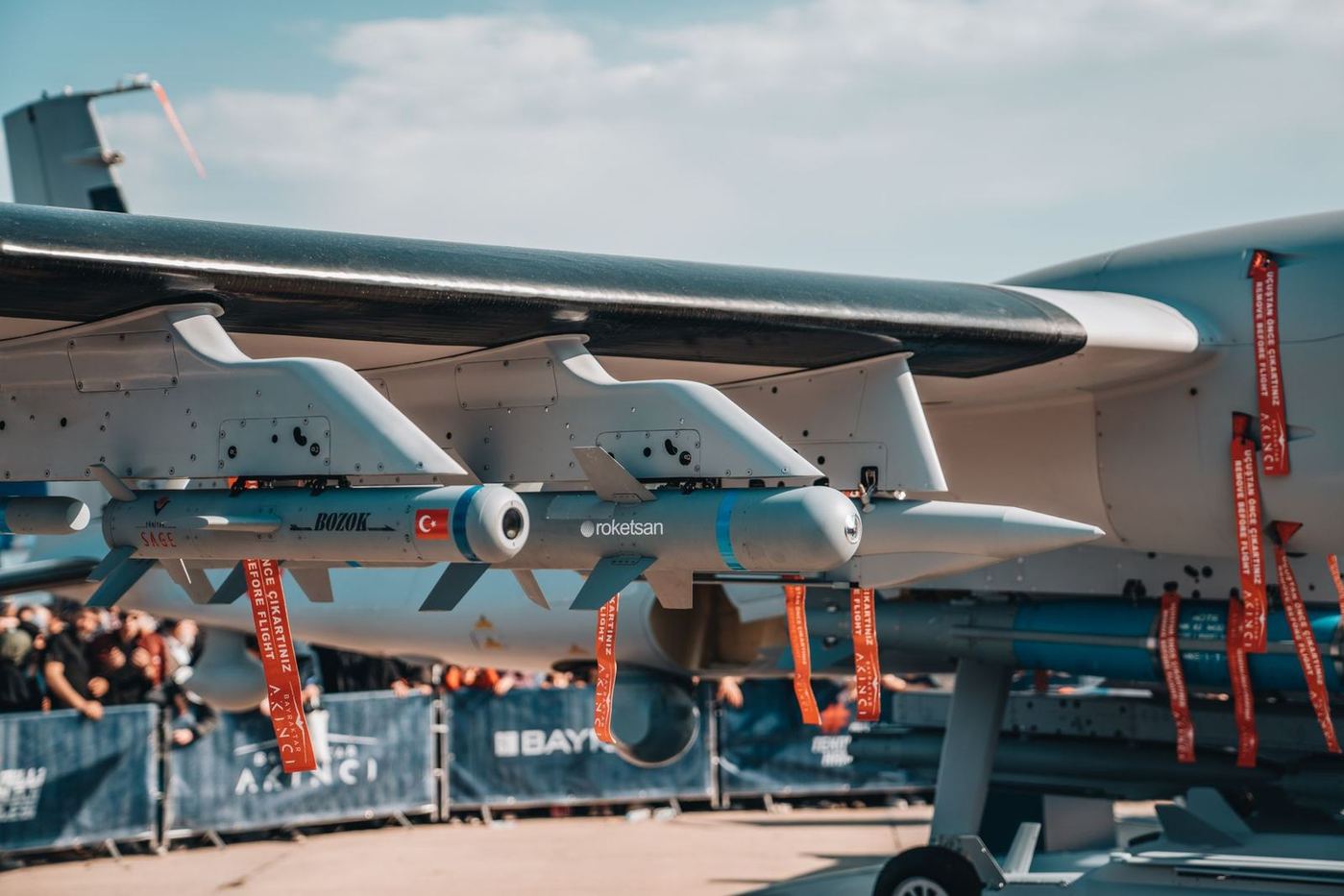
Joint Development for KF-21 Fighter
Hanwha Aerospace and Korea Aerospace Industries (KAI) have formally agreed to jointly develop a domestically produced long-range air-to-air missile. This weapon is intended for integration with South Korea's KF-21 fighter jet, enabling the aircraft to operate with local armaments. The companies confirmed the agreement, which was signed in July at KAI’s headquarters in Sacheon.
KAI is the manufacturer of the KF-21, while Hanwha companies supply several critical systems. Hanwha Aerospace provides the engines, landing gear, and flight-control equipment, with affiliate Hanwha Systems supplying the radar, targeting equipment, and mission computer.
Expanding Prior Collaborations
This new partnership expands on two previous agreements established in February. The initial collaborations focused on overseas marketing for Korean aircraft and sharing supplier networks. A subsequent deal, signed at the World Defense Show in Riyadh, Saudi Arabia, covered aircraft-weapons integration and joint export marketing efforts.
Hanwha Aerospace has been actively developing technology for long-range air-to-air missiles. It is also participating in a government-led project to develop aircraft-to-missile interface design technology, with completion expected by the first half of 2027.
Since 2021, the company has contributed to five of six research projects on solid-fuel ducted ramjet propulsion, a key technology for the new missile.
Competition for W1.9 Trillion Programme
The cooperation positions Hanwha Aerospace to secure a significant role in South Korea's 1.9 trillion won (approximately $1.4 billion) national missile development programme. The Agency for Defense Development is expected to select a primary contractor by the end of 2026. Hyundai Rotem and LIG Defense & Aerospace have also formed a team and are competing for this contract.
The overall missile development is projected to conclude by November 2033, with mass production scheduled to commence from 2035.
This collaboration streamlines the supply chain for South Korea's advanced fighter jet, potentially reducing reliance on foreign weapon systems. For investors, the upcoming decision by the Agency for Defense Development by year-end 2026 will clarify which industrial consortium secures the substantial 1.9 trillion won contract.
The long-term development and production timelines, extending to 2035, indicate sustained revenue streams for the chosen contractors. This will affect companies such as Hanwha Aerospace, KAI, Hyundai Rotem, and LIG Defense & Aerospace.
It also signals continued government investment in domestic defence manufacturing capabilities, a trend that could benefit other Asian defence contractors.
This article is journalism, not investment advice; consult a licensed professional before making financial decisions. Market data is indicative, may be delayed, and should be verified with your broker or exchange before use.
Comments.
Comments are moderated. We remove what is unlawful, abusive or off-topic, and and you remain responsible for what you post.
Reader comments open soon. Until then, corrections and responses go to our newsroom, and we publish what we get wrong on Corrections.