MSCI Downgrade Threat Sinks Indonesia Stocks to Six-Year Low
Jakarta's benchmark index fell over 5 per cent on Monday, following an 11.6 per cent drop on Friday, as MSCI considers reclassifying Indonesia to "standalone" status from "emerging markets" next year.
Market Reaction and MSCI Warning
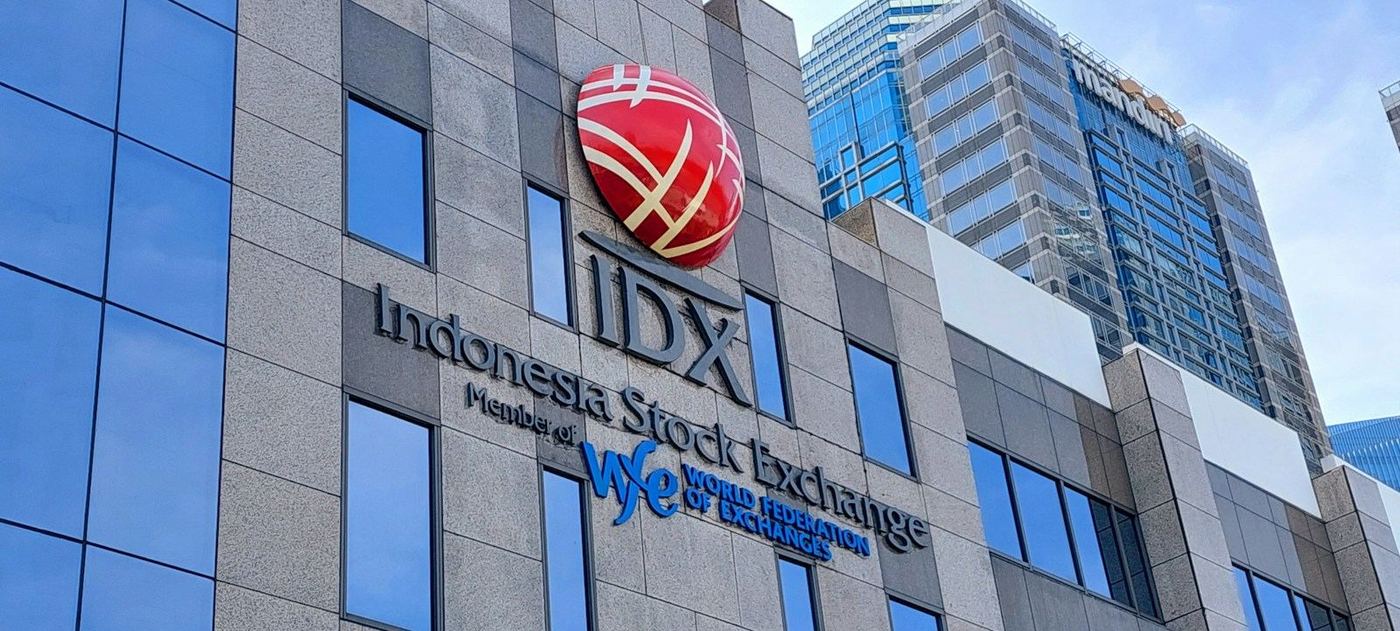
Indonesian benchmark stocks reached a six-year low on Monday, 19 October, following a warning from index provider MSCI. MSCI indicated it is considering reclassifying Indonesia from its "emerging markets" status to "standalone" next year, a move that rattled investor confidence.
Data from the Indonesia Stock Exchange (IDX) shows Jakarta's main index declined over 5 per cent in early trading on Monday, adding to an 11.6 per cent plunge on Friday, 16 October. A shift to standalone status could isolate Southeast Asia's largest economy from international capital flows, potentially grouping it with markets like Lebanon and Zimbabwe.
Regulatory Measures and Past Concerns
In response, the Indonesia Stock Exchange (IDX) announced on Monday, 19 October, that it cut its lower auto-rejection limit to 7 per cent from 15 per cent. The IDX stated this aims to give investors more time to evaluate information and make decisions based on economic fundamentals.
Separately, Indonesia's Financial Services Authority (OJK) unveiled sanctions on Friday, 16 October, against parties linked to alleged trading manipulation in shares of three companies. These fines totalled 2.1 trillion rupiah (US$116.4 million).
MSCI had previously threatened a downgrade to "frontier" status in January 2026 due to concerns about ownership transparency and trading behaviour. On Friday, MSCI stated that a lack of progress in addressing these issues meant even a frontier status reclassification would not fully reflect the severity of the problems.
Capital Outflows and Currency Impact
The potential reclassification could trigger significant capital outflows. Strategists at Goldman Sachs estimate a full MSCI removal might lead to US$5.6 billion in passive fund outflows, with active funds holding over US$8 billion in Indonesian equities.
Market data shows foreign investors have already net sold US$4.88 billion worth of Indonesian stocks this year, on track for the largest annual outflow in at least 16 years. The rupiah has also weakened, trading at 18,040 per US dollar on Monday, 19 October, nearing its record low of 18,190 hit in June this year, according to foreign exchange markets.
Aninda Mitra, head of Asia macro and investment strategy at BNY Investments, noted that while foreign equity exposure has reduced, attracting new capital will be challenging in the current climate.
The MSCI warning significantly raises the stakes for President Prabowo Subianto's government, which has already seen Moody's and Fitch cut their sovereign rating outlooks to negative earlier in 2026.
Strategists at Goldman Sachs emphasise that avoiding reclassification requires Jakarta to provide clear evidence that announced reforms have been consistently implemented and have materially improved market functioning.
The immediate concern for investors, according to Gary Tan, portfolio manager at Allspring Global Investments, is not just index-related selling, but the potential spillover into the rupiah and domestic bond yields. Such market dislocation could tighten financial conditions and impact Indonesia's real economy.
Jakarta's ability to demonstrate tangible progress on market transparency and governance ahead of any final MSCI decision next year will be crucial for maintaining international investor confidence and capital inflows.
This article is journalism, not investment advice; consult a licensed professional before making financial decisions. Market data is indicative, may be delayed, and should be verified with your broker or exchange before use.
Comments.
Comments are moderated. We remove what is unlawful, abusive or off-topic, and and you remain responsible for what you post.
Reader comments open soon. Until then, corrections and responses go to our newsroom, and we publish what we get wrong on Corrections.