Indonesia Petrochemical Expansion Risks Climate Targets, Draws US$6 Billion China-Backed Deal
Indonesia's drive to expand its petrochemical sector, fuelled by significant foreign direct investment (FDI), directly challenges its climate commitments. New large-scale facilities could extend fossil fuel reliance.
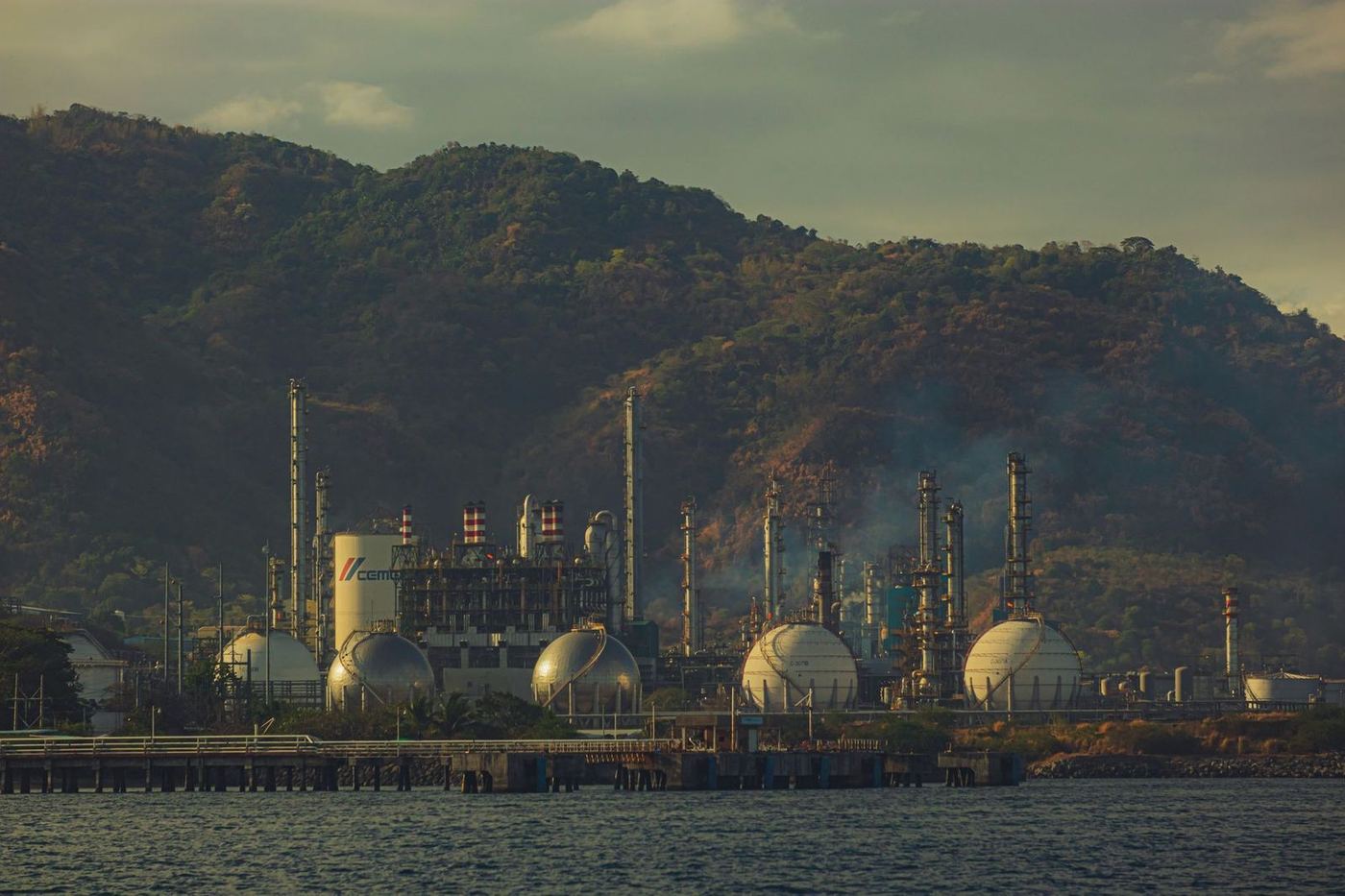
Major Investment Fuels Petrochemical Growth
Indonesia has significantly expanded its petrochemical capacity. In July 2025, the government signed a US$6 billion investment deal with PT Taikun Petro Chemical. This China-backed group will build a refinery and petrochemicals complex in North Kalimantan. The Ministry of Industry states this project will produce over 7.2 million tonnes of methanol and acetic acid annually.
These are crucial components for plastics. The government projects a US$9 billion annual boost to Gross Domestic Product (GDP) and reduced import dependence. The complex, supported by Tongkun, Xinfengming, and Tsingshan, is part of the Kalimantan Industrial Park Indonesia. This park also focuses on electric vehicle (EV) battery production and mineral processing.
In 2023, then-President Joko Widodo presented it as a "green industrial park," partly powered by hydropower. However, the Center of Economic and Law Studies, an Indonesian think-tank, notes it will also use coal.
Scale of Expansion Challenges Climate Goals
PT Taikun's project alone will expand Indonesia's crude oil refining capacity by up to 10 million tonnes per year. This is not the only major development. In November 2025, the government inaugurated a plant owned by South Korea’s Lotte Chemical in Cilegon, West Java. This facility will produce one million tonnes of ethylene annually, a gas used for polyethylene plastic.
The petrochemical industry is highly carbon-intensive. Such substantial investments risk increasing Indonesia’s emissions and prolonging its reliance on fossil fuels. This complicates the country's national commitment to achieve net-zero emissions by 2060.
Nada Zuhaira, an analyst at World Resources Institute Indonesia, warns that building new facilities without a clear decarbonisation plan risks creating stranded assets.
Decarbonisation Hurdles Remain Significant
Indonesia's Ministry of Industry classifies the chemical subsector as "hard-to-abate." This reflects the difficulty of powering the high temperatures needed for petrochemical manufacturing with renewable energy. Steam cracking, essential for plastic raw materials, generates significant carbon dioxide (CO2) emissions.
The Ministry acknowledges PT Taikun's project planning links to greenhouse gas emission growth projections. Fabby Tumiwa, Executive Director for the Institute for Essential Services Reform (IESR), an Indonesian think-tank, notes the complex production processes.
Finding low-carbon alternatives remains challenging, and plastic demand is "exceptionally high." Bio-organic plastics can only replace simple items. High-density polyethylene (HDPE) and similar materials are harder to substitute. Traditional petrochemistry remains significantly cheaper, hindering alternative technologies.
Indonesia's chemical sector emitted approximately 10.3 million tonnes of CO2-equivalent from direct production in 2022. Petrochemicals contributed about a quarter of this, or 0.2% of national emissions. This share could grow with expansion.
The petrochemical industry holds "national strategic project" status, exempting it from regulations like the 2022 captive coal power plant ban. The government is drafting a new industrial decarbonisation regulation, expected in late 2026. This aims to establish the first standardised emission-reduction targets for factories.
In late 2025, the industry ministry, World Resources Institute Indonesia, and IESR released an industrial decarbonisation roadmap. Chemicals, including petrochemicals, are among nine priority subsectors.
For businesses, this means future operations may face new emissions targets, increasing compliance costs or requiring technology upgrades to maintain market access, particularly for exports to regions with carbon border adjustments.
This article is journalism, not investment advice; consult a licensed professional before making financial decisions. Market data is indicative, may be delayed, and should be verified with your broker or exchange before use.
Comments.
Comments are moderated. We remove what is unlawful, abusive or off-topic, and and you remain responsible for what you post.
Reader comments open soon. Until then, corrections and responses go to our newsroom, and we publish what we get wrong on Corrections.