China Durian Prices Halve as Southeast Asia Rail Links Boost Supply
Chinese durian retail prices have nearly halved this summer. Expanded cross-border rail links and diversified sourcing from Southeast Asia drive this reduction, making the fruit more affordable for consumers.
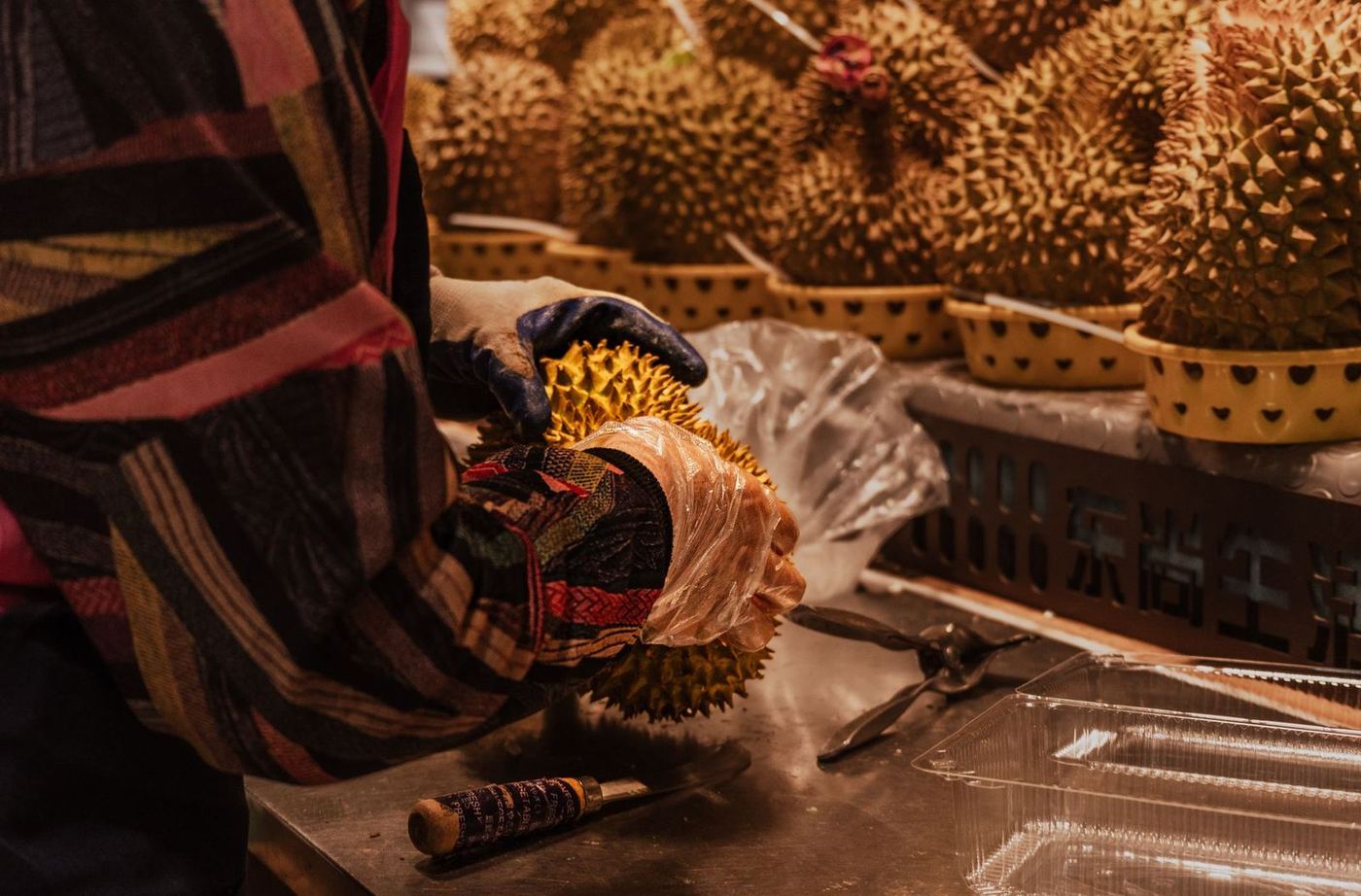
Durian Prices Drop Significantly
Chinese durian retail prices have nearly halved this summer. This price reduction follows expanded cross-border rail links and diversified sourcing from Southeast Asia. Some durians now sell below 40 yuan (190 baht) per kilogramme in China. Guangzhou’s Jiangnan wholesale market, China's largest, saw Thai and Vietnamese durians range from 28 to 31 yuan per kg this August.
This compares with 29 to 39 yuan per kg in August last year. China remains the world's largest durian consumer, accounting for over 90% of global consumption.
New Rail Link Accelerates Deliveries
Rising imports and improved transport links drive these lower prices. The China–Laos–Thailand all-rail cold-chain service, launched in March this year, now runs regularly. It connects Thailand through China’s Yunnan province to Chengdu, Sichuan. This service allows Southeast Asian fruit to reach the Chinese market in as little as three days, state news agency Xinhua reported.
Imported durians now travel under an unbroken cold chain. This includes remotely controlled refrigerated containers, temperature-controlled loading docks, and electric refrigerated vehicles for delivery, Xinhua stated.
Diversified Sourcing Boosts Volumes
China has also broadened its durian sourcing. Since 2022, China approved imports from five additional countries, including Vietnam, Malaysia, and Laos. Previously, Thailand was China's sole approved durian source. This diversification has boosted import volumes. Last year (2025), imports reached 1.87 million tonnes, doubling the 2022 volume.
In the first seven months of this year (January–July 2026), China imported 1.45 million tonnes of durians. This volume represents a more than 45% increase from the same period last year, according to customs data.
This shift demonstrates the tangible impact of infrastructure investment on supply chains and consumer prices. For Southeast Asian agricultural exporters, new rail links and expanded market access mean faster delivery and reduced logistics costs. This can drive increased export volumes and potentially higher farmer incomes.
Chinese consumers benefit from greater affordability and availability of previously expensive goods. Businesses should monitor how similar cold-chain logistics improvements could affect other perishable commodity markets across Asia.
This article is journalism, not investment advice; consult a licensed professional before making financial decisions. Market data is indicative, may be delayed, and should be verified with your broker or exchange before use.
Comments.
Comments are moderated. We remove what is unlawful, abusive or off-topic, and and you remain responsible for what you post.
Reader comments open soon. Until then, corrections and responses go to our newsroom, and we publish what we get wrong on Corrections.